Mouse Elongin-A ELISA: A Comprehensive Overview
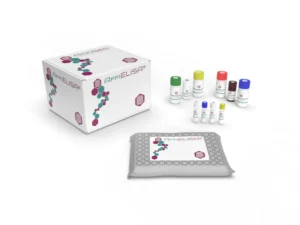
Mouse Elongin-A ELISA is a highly sensitive and specific enzyme-linked immunosorbent assay designed for the quantitative measurement of Elongin-A in mouse samples. Elongin-A is a crucial component of the transcription elongation factor B (SIII), which plays an important role in the elongation phase of transcription by RNA polymerase II. It is also involved in the regulation of other transcription-related processes, making it a significant target for research in gene expression and transcription regulation.

Key Features and Benefits
- High Sensitivity and Specificity: The Mouse Elongin-A ELISA offers excellent sensitivity and specificity, allowing for precise detection of Elongin-A levels in complex biological samples like serum, plasma, and tissue lysates. Research studies on protein expression, such as those found on NIH.gov, emphasize the importance of sensitive assays for accurate protein quantification.
- Quantitative Analysis: This assay provides reliable quantitative data on Elongin-A concentrations, which is essential for understanding its role in transcription regulation and other cellular processes. For more information on transcription regulation research, visit NCBI.gov and PubMed.gov.
- Broad Sample Compatibility: The assay is optimized for use with various mouse sample types, making it versatile for different experimental setups, as recommended by standardized laboratory protocols found on FDA.gov.
Principle of the Assay
The Mouse Elongin-A ELISA works on the principle of a sandwich ELISA. In this format, the Elongin-A present in the sample is captured by antibodies coated on a microplate. After binding, a second antibody specific to Elongin-A is added, which is then detected via a colorimetric substrate. The intensity of the color is directly proportional to the concentration of Elongin-A in the sample, which can be measured spectrophotometrically.
Applications in Research
Elongin-A is implicated in several biological processes, particularly in the transcriptional regulation of genes:
- Gene Expression Studies: The ability to measure Elongin-A levels allows researchers to study its involvement in the elongation phase of transcription, which is crucial for gene expression regulation. For further details on gene expression mechanisms, you can explore resources available at NIMH.gov.
- Transcription-Related Disorders: Abnormal regulation of Elongin-A can lead to various transcriptional disorders. Researchers investigating these conditions often rely on ELISA kits to monitor protein levels in disease models, as outlined in studies published on NCBI.gov.
Protocol Recommendations
For optimal results using the Mouse Elongin-A ELISA, it is crucial to follow these guidelines:
- Sample Preparation: Ensure that all samples are free from contaminants and properly diluted for accurate quantification. Detailed procedures for sample preparation in ELISA assays are provided on NIH.gov.
- Standard Curve Generation: Create a standard curve using known concentrations of Elongin-A to ensure the assay’s accuracy. The importance of standard curve generation in ELISA protocols is well-documented in research found on PubMed.gov.
- Reagent Preparation and Storage: Proper preparation and storage of reagents are essential for maintaining the integrity of the assay. Recommendations for reagent handling are also available on NIST.gov.
Troubleshooting and Optimization
Some common troubleshooting tips include:
- Low Signal Detection: If the absorbance values are too low, ensure that the sample is sufficiently concentrated and that the incubation times are optimal. Further troubleshooting advice can be found on FDA.gov.
- Non-Specific Binding: Non-specific signals can be reduced by optimizing the blocking steps or adjusting the concentrations of antibodies. Guidelines for optimization of ELISA assays can be explored on CDC.gov.

Conclusion
The Mouse Elongin-A ELISA is an invaluable tool for researchers investigating transcription regulation and related processes. With its high sensitivity, versatility, and reliability, this assay enables detailed studies on Elongin-A’s role in gene expression, transcription elongation, and more. Further resources and detailed protocols are available on NIH.gov, NCBI.gov, and FDA.gov, making this kit a top choice for academic and clinical research laboratories.
This ELISA kit supports a range of applications and offers robust performance, ensuring accurate and reproducible results in diverse research contexts.